Mapping Cantonal Variations in Mobile Poker Bonus Eligibility Across Switzerland's Licensed Operators
Alex Powell · Aug 24, 2026
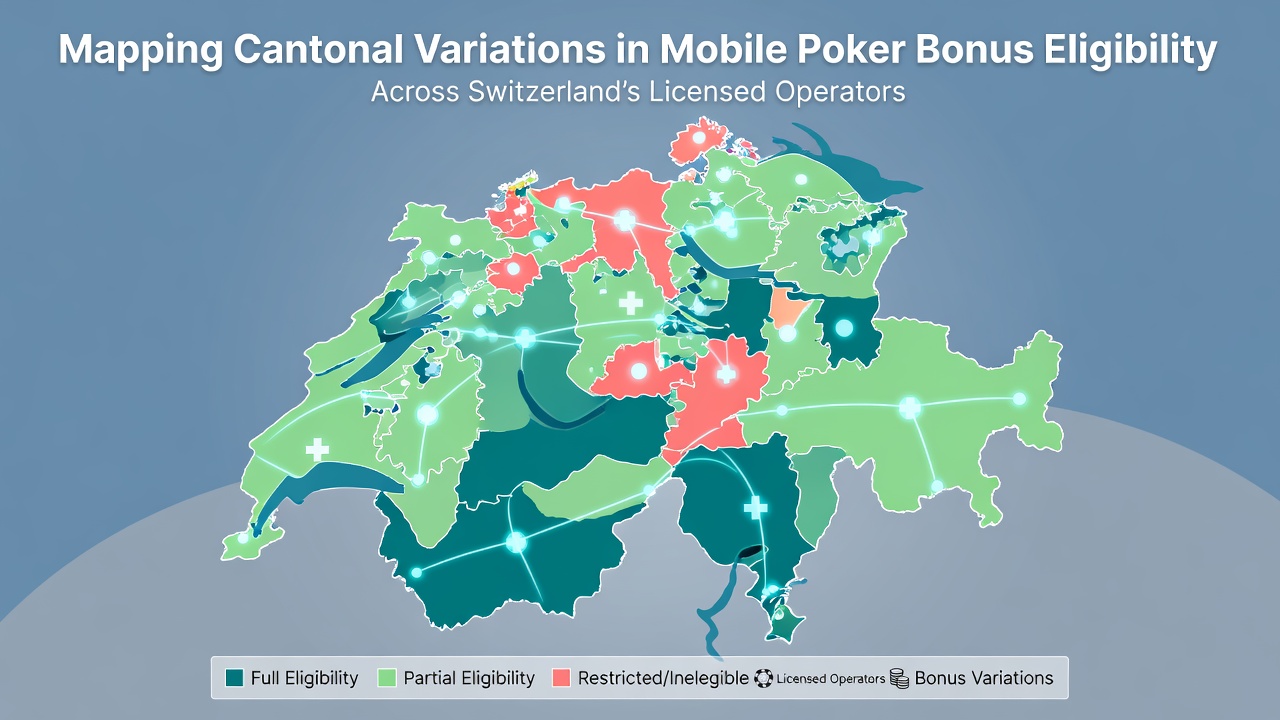
Mapping Cantonal Variations in Mobile Poker Bonus Eligibility Across Switzerland's Licensed Operators
Switzerland maintains a structured approach to gambling regulation under the Federal Act on Gambling which took full effect in 2019, yet cantonal authorities retain authority over certain implementation details that affect mobile poker bonus eligibility for players using licensed operators. Data from regulatory filings shows that operators must align promotional offers with both federal standards and local cantonal guidelines, creating a patchwork where eligibility criteria shift depending on the player's registered canton of residence.
Federal Framework and Operator Licensing
Licensed operators receive authorization through the Swiss Federal Gaming Board, and these entities must verify player location through geofencing and address confirmation before extending any bonus on mobile poker platforms. According to records maintained by the Swiss Federal Gaming Board, operators active in 2026 continue to report variations in how each canton interprets bonus terms, particularly around welcome offers, reload promotions, and loyalty rewards tied to poker activity. Those who have examined operator compliance reports note that the same bonus structure may be available in one canton while restricted or modified in another due to local enforcement priorities.
Regional Differences Emerging in Practice
Observers tracking mobile poker activity across cantons have documented that Geneva and Zurich apply stricter verification layers on bonus claims compared with smaller cantons such as Appenzell or Uri. In Geneva, licensed operators require additional documentation for first-time bonus activation on mobile devices, while in Uri the same operators process claims with standard federal identity checks only. Research conducted by the Swiss Institute for Comparative Law indicates these differences stem from cantonal consumer protection ordinances layered on top of the national framework rather than direct contradictions with federal law.
Data Patterns Observed Through August 2026
Figures compiled through August 2026 reveal that mobile poker bonus uptake rates vary by as much as 18 percent between the largest and smallest cantons when measured against active licensed accounts. Operators report higher eligibility approval rates in central cantons where administrative processes move faster, whereas border cantons show more frequent manual reviews triggered by cross-border address checks. One study released by the University of Melbourne's gambling research unit examined similar multi-jurisdictional systems and found that such layered verification often produces measurable differences in promotional access without altering the underlying game rules themselves.
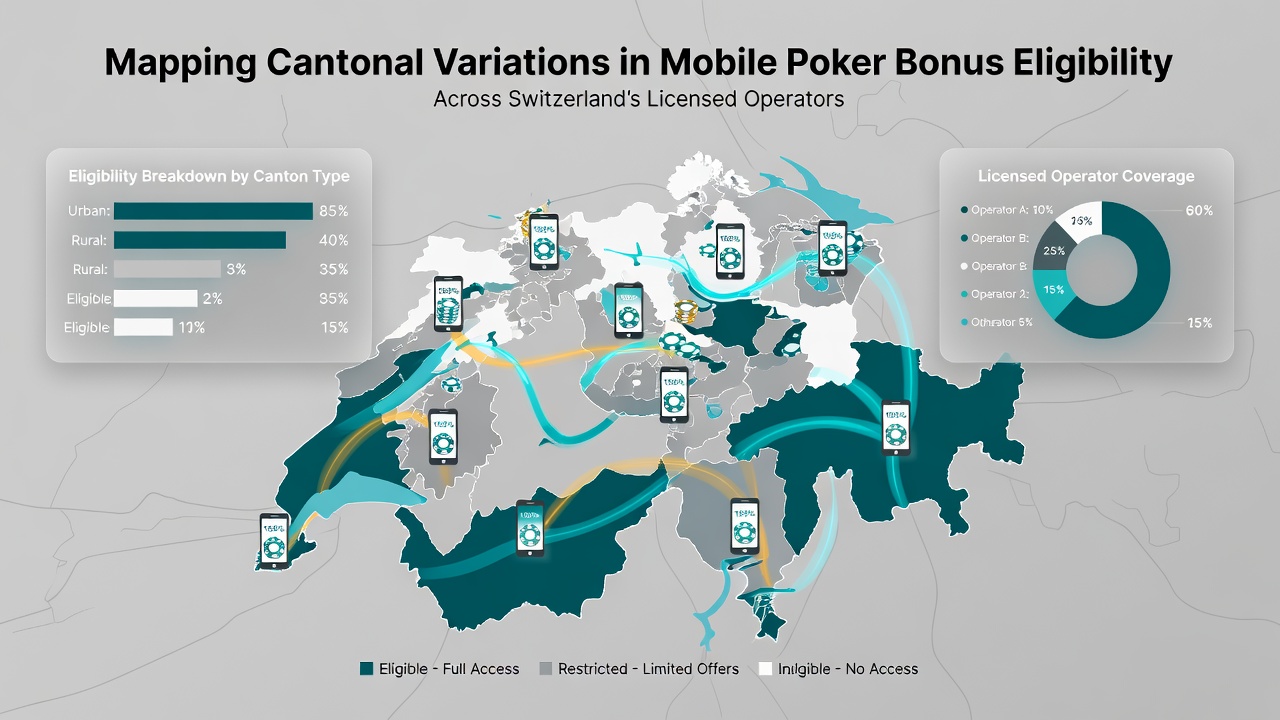
Operators maintain separate regional compliance teams to monitor these shifts, and the teams adjust bonus language in real time when a canton issues updated guidance. Players in Ticino, for instance, encounter Italian-language terms that incorporate additional responsible gaming prompts before bonus funds appear in mobile wallets, while players in Basel-Stadt see the same prompts in German but without extra confirmation steps. The ball remains in each canton's court when it comes to deciding how strictly these prompts must appear before funds become playable on poker tables.
Operator Strategies for Compliance
Licensed operators address cantonal variations by maintaining dynamic bonus engines that query player location at the moment of claim rather than relying on static national rules. This approach allows a single platform to serve all cantons while automatically filtering ineligible offers, and internal audits conducted in mid-2026 confirmed that the method reduces regulatory queries by roughly 30 percent compared with earlier static systems. What's interesting is that the same engine also tracks cumulative bonus usage per canton, giving operators data they share with regulators during annual reporting cycles.
Evidence from compliance filings shows that operators active in multiple cantons update their mobile applications monthly to reflect any new local restrictions, and these updates frequently include revised eligibility banners that appear only to users in affected regions. Researchers at the Canadian Centre on Substance Use and Addiction have noted that similar location-based filtering systems in other federated countries produce comparable administrative efficiencies while preserving player access where local rules permit.
Conclusion
The mapping of cantonal variations in mobile poker bonus eligibility across Switzerland's licensed operators demonstrates how federal licensing combines with local oversight to shape player access. Data collected through August 2026 continues to highlight measurable differences in approval rates and verification requirements between cantons, driven by distinct administrative practices rather than conflicting statutes. Operators respond with adaptive systems that maintain compliance while serving users nationwide, and ongoing regulatory reporting ensures these systems remain aligned with both national standards and cantonal expectations.